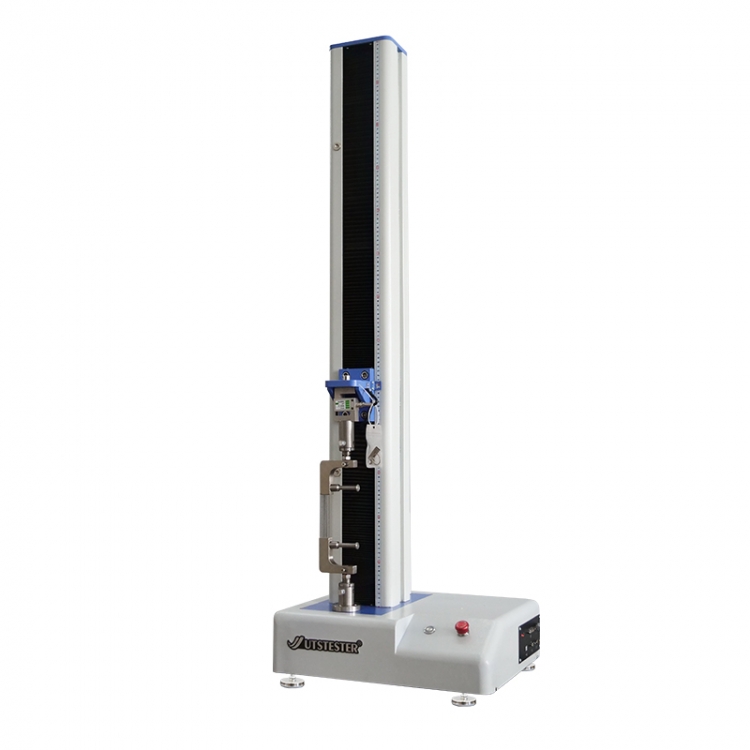
A universal strength tester is a machine that pulls, pushes, or bends a sample to measure how much force it withstands before it fails. People often use the term interchangeably with "universal testing machine," and this post will clarify where the two labels fit best. Readers exploring options may encounter a single-column strength tensile testing machine for lighter loads or a dual column universal testing machine for heavier work. Either setup counts as material tensile strength test equipment when the job involves pulling specimens apart. The sections below walk through the testing process step by step, from preparing a specimen to recording the final results.
Key Takeaways
-
A universal strength tester pulls, pushes, or bends materials to measure their strength.
-
The machine uses a frame, load cell, and software to apply force and record data.
-
Operators prepare specimens carefully to ensure accurate and repeatable results.
-
The tester can perform tensile, compression, and flexural tests by changing fixtures.
-
Regular testing helps ensure product safety and quality across many industries.
What Is a Universal Strength Tester?
A Simple Definition
A universal strength tester is a mechanical system that grips a sample at two points and applies a controlled force until the sample stretches, compresses, or breaks. The machine records the force and the resulting movement, and the software converts those readings into measurable properties. Engineers use these numbers to compare materials, verify a production batch, or confirm that a finished part meets its design intent. The word "universal" refers to the machine's ability to accept many specimen shapes through interchangeable fixtures, not to a single fixed test. A lab can run a fabric strip in the morning and a metal bar in the afternoon on the same frame.
Strength Tester vs. Universal Testing Machine
People often treat the two labels as synonyms, yet each carries a slightly different emphasis. A universal strength tester is commonly associated with tensile, or pull, testing. The operator clamps a specimen, pulls it apart, and reads the peak force at failure. A universal testing machine, or UTM, typically runs tensile, compression, and flexural tests on one platform. The distinction matters when a buyer describes a requirement to a supplier.
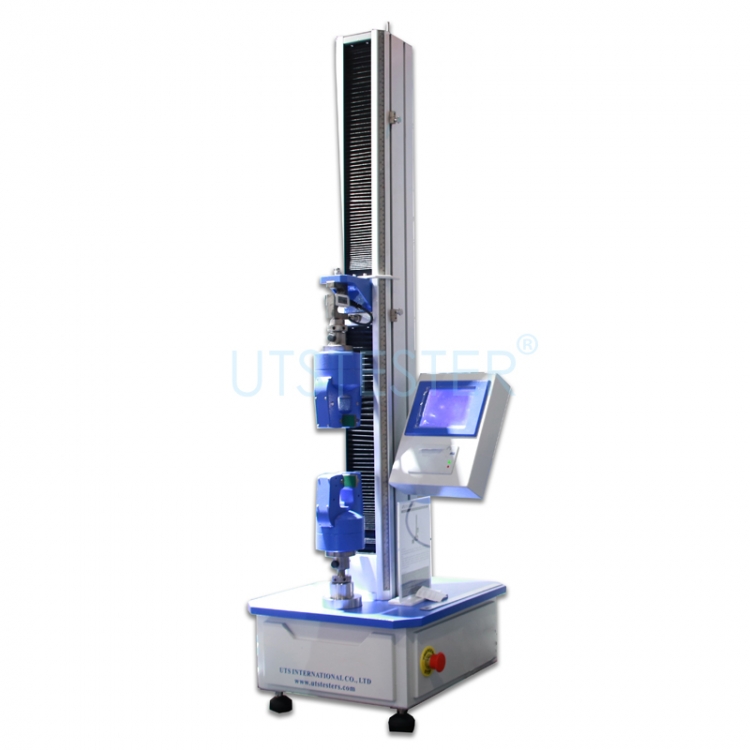
UTMs come in a wide range of force capacities. A benchtop model may suit light films and yarns, while a floor-standing frame handles structural components. Different fixtures extend the same machine to many products, components, and materials. A single-column strength tensile testing machine fits lighter loads and saves bench space. A dual column universal testing machine adds stiffness and capacity for heavier specimens. Neither design is inherently better; the right choice depends on the expected load range, the specimen size, and the available floor space. A dual column universal testing machine may be overkill for thin packaging film, and a single-column frame may lack the rigidity for thick metal bar. Matching the frame to the job keeps results reliable and cost sensible.
The range of materials is broad. The table below shows common categories and where each one typically appears.
|
Material Category
|
Specific Materials / Forms Tested
|
Typical Application Context
|
|
Polymers
|
Polyethylene (PE), polypropylene (PP), polystyrene (PS), plastics, rubber, polymer composites
|
General tensile testing of flexibility, strength, durability
|
|
Textiles
|
Fabrics, yarns, fibers
|
Clothing, upholstery, technical textiles — tear resistance, fiber cohesion, yarn strength
|
|
Metals
|
Aluminum alloys, steel bars
|
Aerospace (fuselage panels), yield strength of steel bars
|
|
Films
|
Low-density polyethylene (LDPE) films, high-density polyethylene (HDPE)
|
Packaging — tensile strength, elongation, resistance to tearing in transport
|
A buyer who needs only pull tests may find a universal strength tester sufficient. A lab that expects to add compression or bend work later should plan for a full UTM. Either way, the equipment counts as material tensile strength test equipment whenever the primary job is measuring how a specimen behaves under pull.
Key Components
Frame and Crosshead
The frame reacts to every test load and must not deform itself. Frame stiffness ensures the machine measures the material, not its own flex. A fixed crosshead holds the stationary grips, and a moving crosshead carries the other grips toward or away from the specimen. Columns connect the crossheads and govern alignment under load. A single-column design keeps the footprint small and offers easy access to the test area, which suits films, wires, rubbers, foams, paper, tapes, and small parts. Capacity typically reaches about 10 kN. A dual column universal testing machine distributes load symmetrically and stays aligned under high force, with capacities from roughly 5 kN to 1,000 kN or more. That design fits metal specimens, profiles, welded joints, composites, and industrial parts, though it takes up more floor space.
Drive systems vary as well. One common layout uses an AC servo motor with synchronous belt transmission, and the lead screw and crosshead guide sit concentrically to protect accuracy. Builders often proof-load the frame to 120%–200% of rated capacity. Buyers comparing options can look at UTS International for reference designs that pair compact aluminum alloy covers with corrosion-resistant, lubrication-free crossheads.
Load Cell and Software
The load cell is the heart of force measurement. It is a transducer that converts applied force into an electrical signal proportional to that force. A standard load cell uses a Wheatstone bridge of strain gages bonded to an elastic element. Force deforms the element, the gage resistance changes, and the output signal shifts in step with the load. The sequence runs as follows:
-
The moving crosshead applies force to the specimen.
-
The elastic element deforms.
-
Strain gage resistance changes.
-
The bridge outputs a signal proportional to force.
Software turns that signal into usable results. An operator opens the Method screen, picks a template for tension, compression, or flexure, sets the crosshead rate and end-of-test condition, and adds prompts for specimen dimensions. Those inputs let the system convert force-displacement data into stress-strain values, modulus, strength, and strain to failure. A QuickTest option produces a fast force-displacement curve without authoring a method. Real-time plotting, automatic calculation of maximum force and tensile strength, and export to Word, PDF, or Excel round out the workflow.
How a Universal Strength Tester Works
Preparing the Specimen
Good results begin before the machine moves. The operator first cuts or molds the specimen to the geometry the test method requires. A tensile strip needs parallel edges and a consistent width. A compression cube needs flat faces that sit square against the platens. Dimensions then go into the software, because the system converts raw force into stress using the measured cross-section. A wrong width produces a wrong strength value, even when the machine itself performs perfectly.
Fixture selection comes next. Wedge grips suit rigid plastics and metals. Pneumatic grips hold films and foils without crushing them. Textile clamps prevent fabric from slipping at the jaws. The operator mounts the correct pair, checks alignment, and confirms that the specimen sits centered between the crossheads. Misalignment introduces bending, and bending skews the reading.
Parameter setup closes the preparation stage. The operator selects a test template, enters the crosshead speed, and defines the end-of-test condition, such as a percentage drop in force after the peak. A single-column strength tensile testing machine handles this routine well for light specimens, because the open test area allows quick loading and visual checks. The operator then balances the load cell and zeroes the displacement channel before the run starts.
Applying Load and Recording Results
The test itself follows a controlled sequence:
-
The moving crosshead advances at the programmed rate.
-
The grips transfer force into the specimen.
-
The load cell deforms and outputs a signal proportional to the applied force.
-
The software logs force and displacement together in real time.
The rate matters. A fast pull can inflate the measured strength of some polymers, so the method fixes the speed and the operator holds it constant. The universal strength tester stops automatically when the specimen breaks or the end condition triggers.
The software then reduces the raw curve into reported values. Tensile strength comes from the maximum force divided by the original cross-sectional area. Elongation comes from the change in gauge length at failure, expressed as a percentage of the starting length. Stiffness comes from the slope of the straight portion of the stress-strain curve, which describes how readily the material resists elastic deformation. The system also flags the yield point where the curve first departs from linearity.
Recording practices protect the data. The software stamps each run with the method name, specimen dimensions, operator, and date. Export to PDF or spreadsheet keeps a traceable record for quality audits and design reviews. Repeat tests on several specimens reveal scatter, and a tight spread signals a consistent material and a well-controlled process.
Test Types and Applications
Tensile, Compression, and Flexural Tests
Each test type answers a different question about a material. Tensile testing pulls a specimen apart and measures tensile strength, elongation, and stiffness. Compression testing pushes a sample together and measures how much load it carries before it buckles or crushes. Flexural testing bends a bar across two supports and measures flexural strength and modulus, which shows how a material behaves under bending loads.
A universal strength tester runs all three when the operator swaps fixtures and selects the matching method. The same frame that pulls a plastic strip can compress a foam block or bend a composite beam. That flexibility makes the machine a practical piece of material tensile strength test equipment for labs that handle mixed workloads.
Industries and Use Cases
Product design teams rely on these tests to compare candidate materials before committing to a specification. A packaging engineer can pull an LDPE film to confirm it stretches far enough for a forming process. A textile lab can test fabric strips for tear resistance and yarn strength, which predicts how a garment or upholstery panel holds up in service.
Quality control uses the same data to catch drift. A production batch that fails to match the baseline tensile strength signals a problem in the material or the process, and the lab can flag it before finished goods ship. Aerospace teams test aluminum alloys for yield strength, and metal fabricators check steel bars the same way.
Testing connects directly to performance. A material that meets its strength and elongation targets behaves as intended in the field, and a material that misses them fails early. Precise measurement at each stage supports safer products and faster development.
A universal strength tester grips a specimen, applies a controlled force, and records how the material responds until it breaks or reaches a set limit. That simple sequence delivers tensile strength, elongation, and stiffness data that support design decisions and quality checks across polymers, textiles, metals, and films. Readers who want to compare frames or explore equipment options can turn to UTS International for guidance. Precise materials testing will keep shaping safer products and faster innovation as new materials reach the market.
FAQ
What does "universal" mean on a strength tester?
The label refers to the machine's ability to accept many specimen shapes through interchangeable fixtures. One frame can hold fabric strips, films, plastic bars, or metal samples as the operator swaps grips and selects a matching method. The word does not describe a single fixed test.
How does an operator choose between a single-column and a dual-column frame?
The expected load range and specimen size drive the decision. A Single-Column Strength Tensile Testing Machine suits films, wires, rubbers, and small parts at lighter capacities and saves bench space. A Dual Column Universal Testing Machine adds stiffness and alignment under high force for metals, composites, and industrial parts.
What data does the software report after a test?
The software converts force and displacement readings into tensile strength, elongation, and stiffness. It also flags the yield point and plots the stress-strain curve in real time. Each run carries the method name, specimen dimensions, operator, and date for traceable records.
Can one machine really handle tensile, compression, and flexural work?
Yes. The operator changes fixtures and selects the matching method, and the same frame runs all three test types. That flexibility makes the equipment practical Material Tensile Strength Test Equipment for labs with mixed workloads across polymers, textiles, metals, and films.
Why does specimen preparation matter so much?
A wrong width or a misaligned specimen skews the reading, even when the machine performs perfectly. The software converts raw force into stress using the measured cross-section. Parallel edges, flat faces, and centered mounting keep results reliable and repeatable.


 +86 152 6060 5085

 English
 русский
 español
 português
 العربية
 Polski




 hello@utstesters.com
 hello@utstesters.com
 +86 152 6060 5085
 +8615260605085
